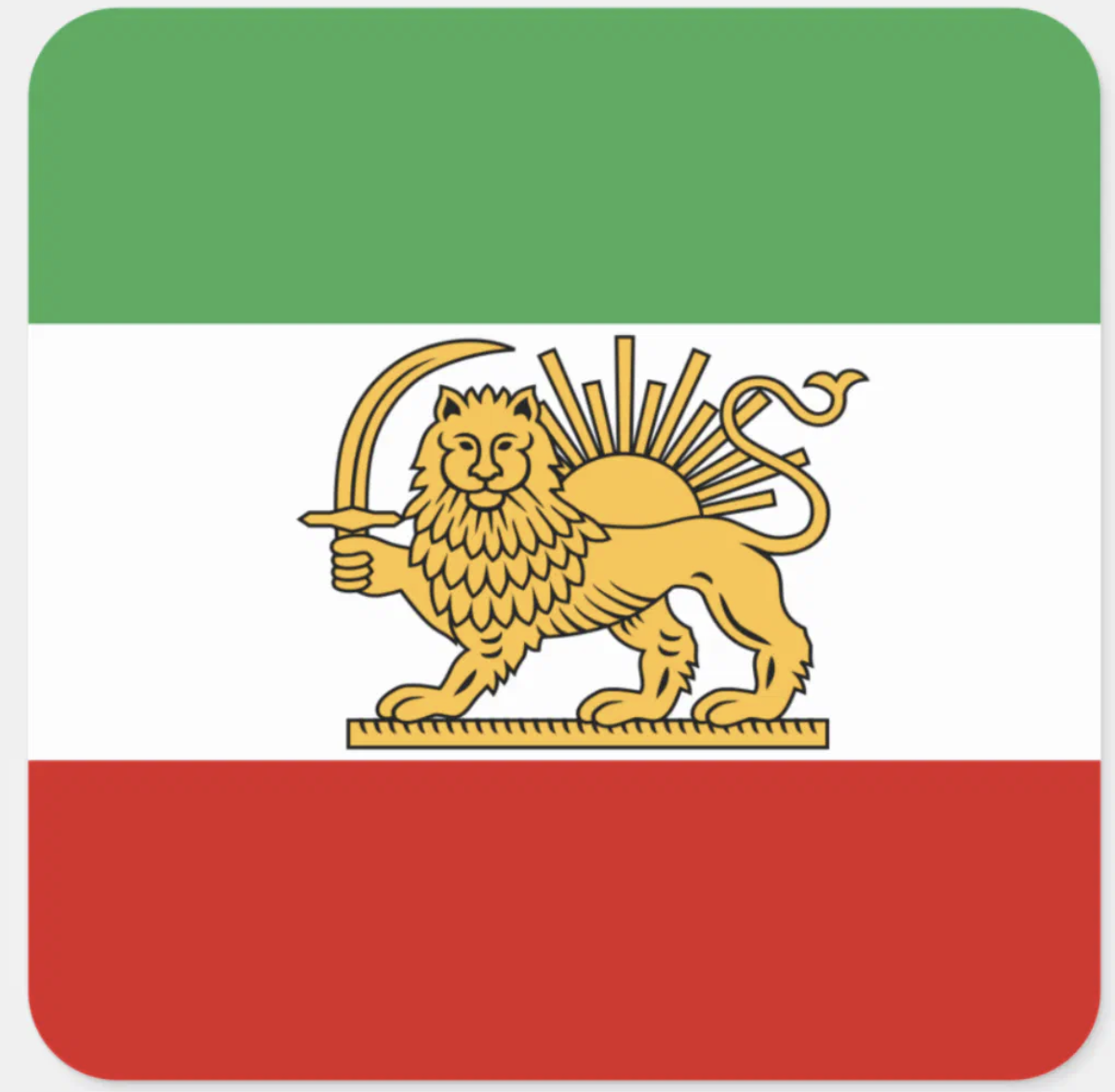
70 Years of History
From strategic alliance to bitter adversaries: explore the key events that shaped U.S.-Iran relations.
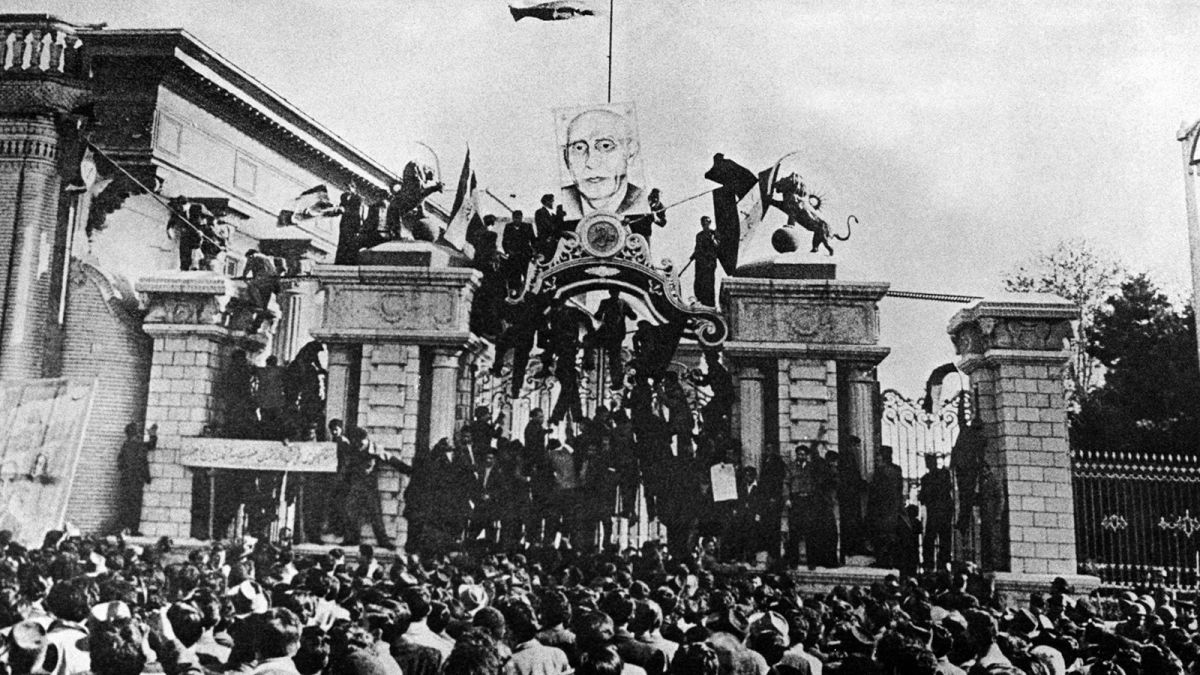
Pro-Shah demonstrators during the 1953 coup
Operation Ajax: The CIA Coup That Changed Everything
In August 1953, the United States, in a joint operation with British intelligence codenamed Operation Ajax, orchestrated a coup to overthrow Iran's democratically elected Prime Minister, Mohammad Mosaddegh. The primary catalyst was Mosaddegh's 1951 nationalization of Iran's oil industry, which had been under British control. This intervention installed Mohammad Reza Shah Pahlavi as monarch and is widely seen in Iran as a profound violation of national sovereignty.
.jpg)
President Carter and Shah Pahlavi during the alliance era
Atoms for Peace: America Launches Iran's Nuclear Program
Under President Eisenhower's 'Atoms for Peace' initiative, the U.S. provided Iran with its first nuclear research reactor and technical training for Iranian scientists. The goal was to promote peaceful use of nuclear energy among American allies.
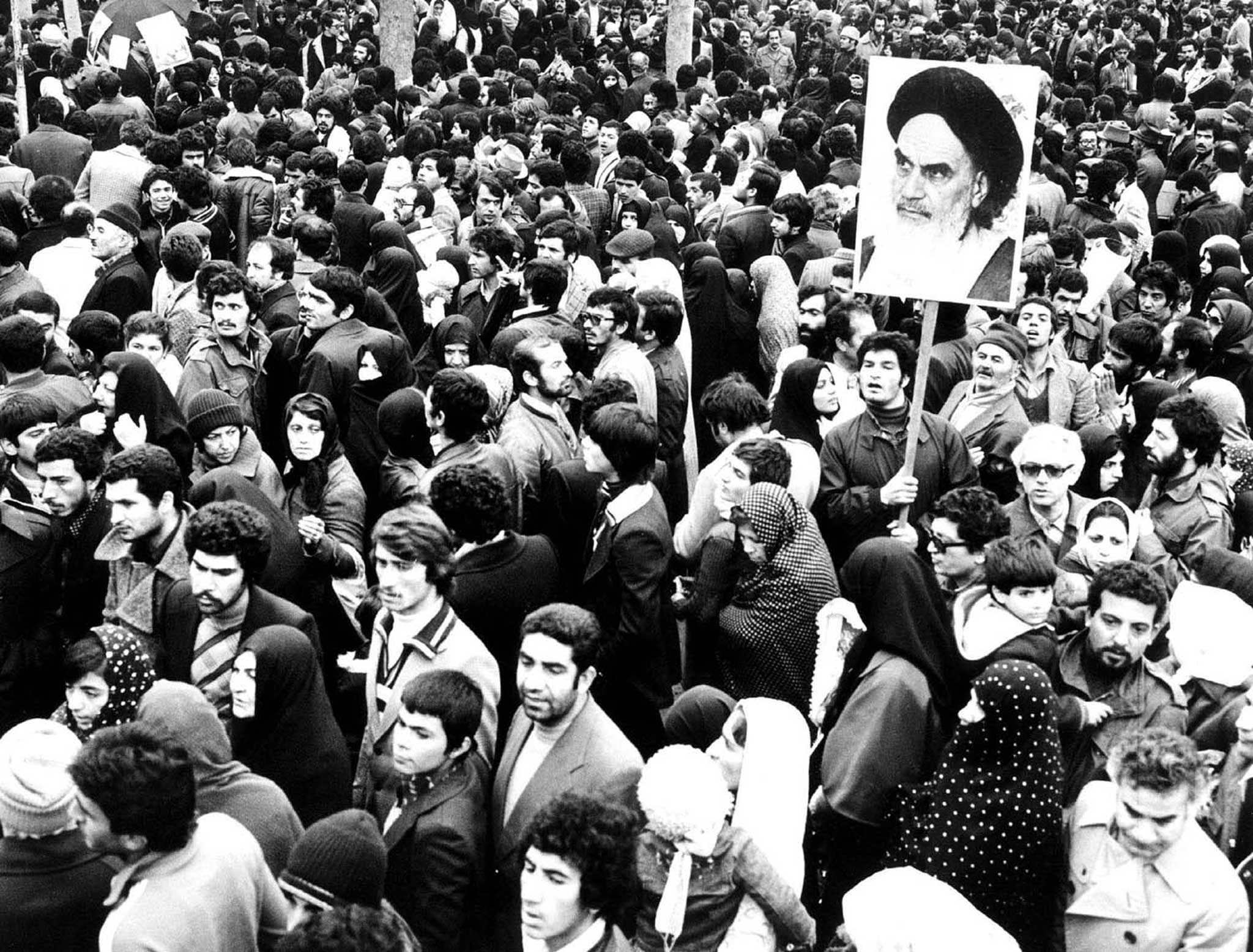
Millions of Iranians took to the streets during the 1979 revolution
The Islamic Revolution: A Paradigm Shift
Widespread popular protests, galvanized by Ayatollah Ruhollah Khomeini, culminated in the Islamic Revolution of 1979. The revolution was fueled by economic grievances, religious fervor, and nationalist anger at foreign influence. In January 1979, the Shah fled Iran. On February 1, Khomeini returned to Tehran and established the Islamic Republic.

Iranian students climb the gates of the U.S. Embassy
The Hostage Crisis: 444 Days That Severed Ties
On November 4, 1979, radical Iranian students stormed the U.S. Embassy in Tehran, taking 66 Americans hostage. They demanded the Shah's return to Iran to stand trial. A botched military rescue mission in April 1980 killed eight American service members. The 52 remaining hostages were held for 444 days.

Trench warfare during the Iran-Iraq War
The Iran-Iraq War: America's Calculated Tilt
When Saddam Hussein invaded Iran in September 1980, the U.S. officially maintained neutrality but effectively 'tilted' toward Iraq. The Reagan administration provided Iraq with intelligence, economic aid, and military components—even as Iraq used chemical weapons against Iranian troops.

Wreckage of Iran Air Flight 655 recovered from the Persian Gulf
USS Vincennes: A Civilian Tragedy
On July 3, 1988, the USS Vincennes shot down Iran Air Flight 655, a civilian Airbus A300 on a scheduled flight to Dubai. All 290 people aboard, including 66 children, were killed. The U.S. claimed the crew mistakenly identified the jet as an attacking fighter.
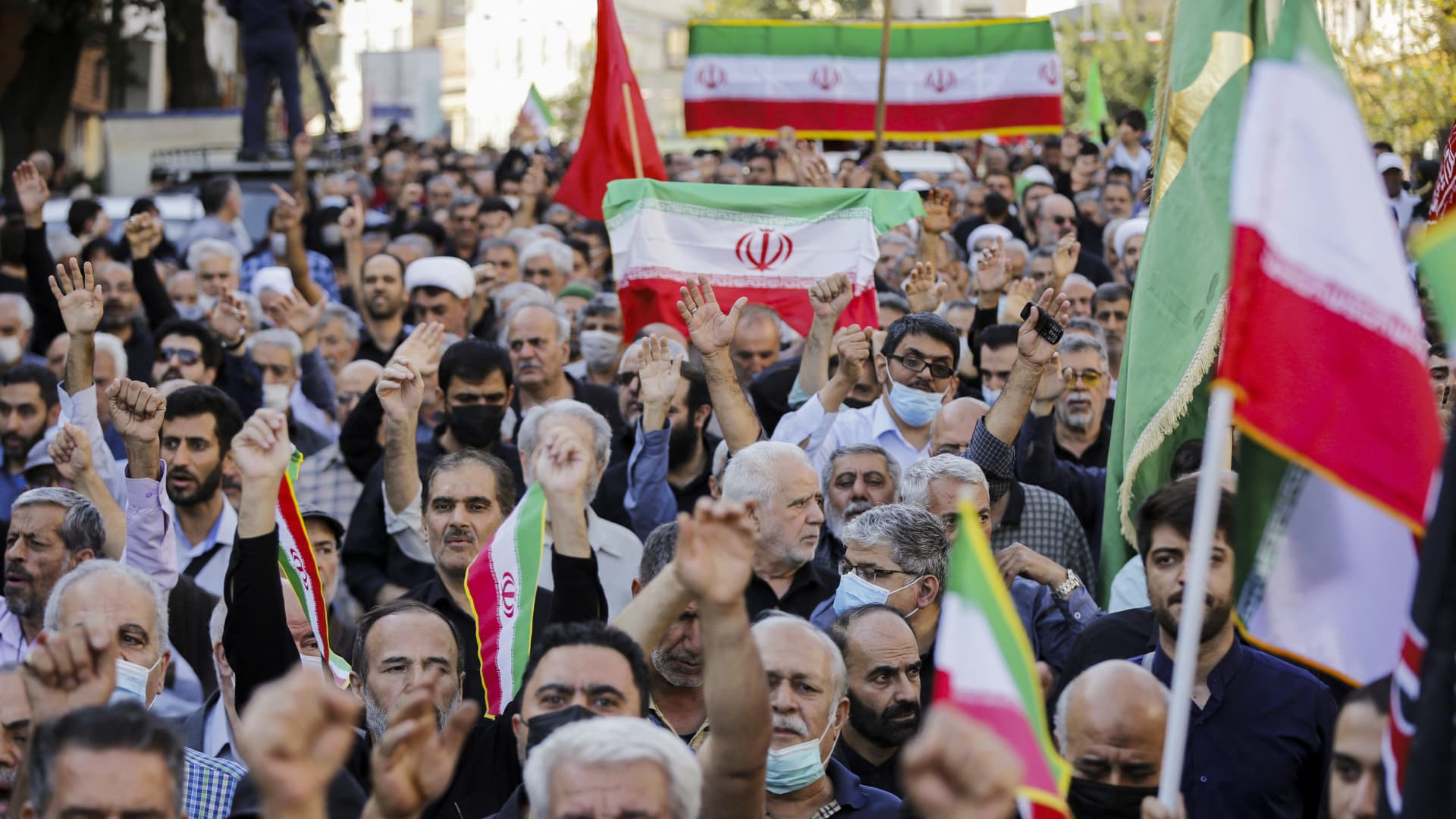
Protests against economic hardship in Iran
Axis of Evil: A New Era of Confrontation
In his 2002 State of the Union address, President George W. Bush labeled Iran part of an 'Axis of Evil' alongside Iraq and North Korea. This rhetorical shift signaled a dramatic escalation in U.S. policy toward Iran.

President Obama and President Rouhani during their historic phone call
The Historic Phone Call: A Thaw Begins
In September 2013, President Barack Obama and newly elected Iranian President Hassan Rouhani held a historic phone call—the first direct communication between leaders of the two countries since 1979. This breakthrough paved the way for nuclear negotiations.
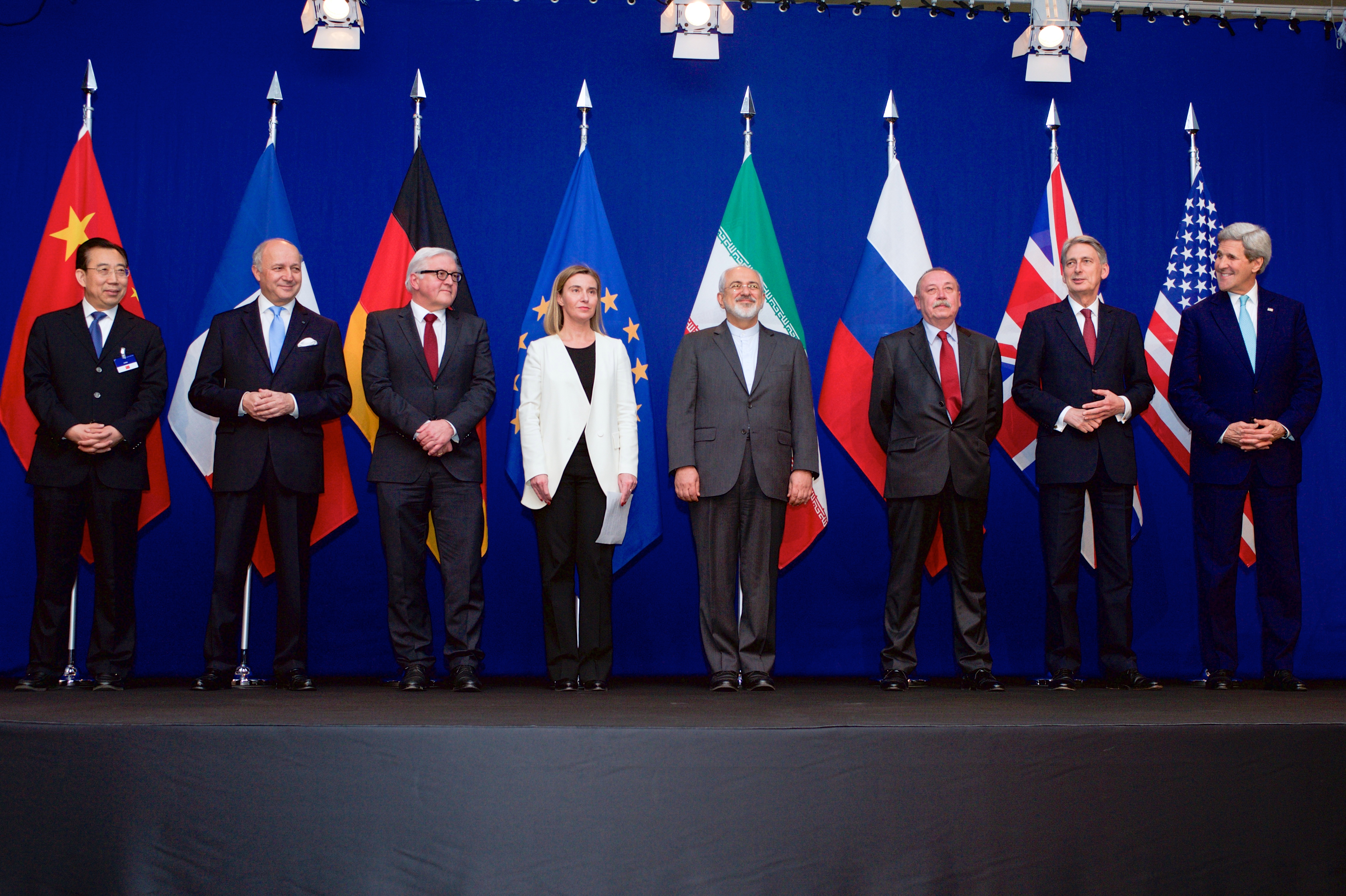
P5+1 and Iran negotiations in Lausanne, Switzerland
The JCPOA: A Landmark Nuclear Agreement
In July 2015, Iran and the P5+1 (U.S., U.K., France, China, Russia, Germany) announced the Joint Comprehensive Plan of Action. Iran agreed to dismantle much of its nuclear program and accept rigorous inspections in exchange for sanctions relief.
Withdrawal: The Deal Collapses
In May 2018, President Donald Trump unilaterally withdrew the United States from the JCPOA, calling it 'the worst deal ever.' The U.S. reimposed all previous sanctions and enacted an even more stringent 'maximum pressure' campaign.

The burning wreckage following the Soleimani strike
The Soleimani Strike: On the Brink of War
On January 3, 2020, a U.S. drone strike ordered by President Trump killed General Qasem Soleimani, commander of Iran's elite Quds Force, near Baghdad. Soleimani was considered one of Iran's most powerful figures.
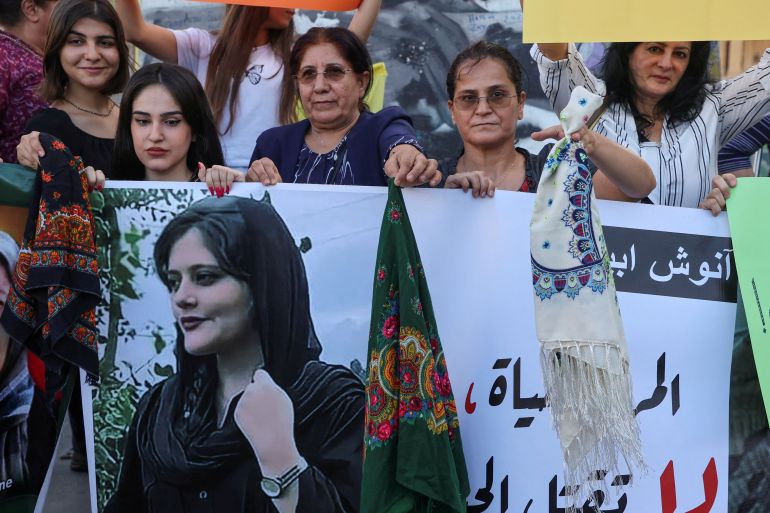
Brave Iranian women burning hijabs in defiance of the Islamic Republic
Woman, Life, Freedom: The Islamic Republic Massacres Its Own People
On September 16, 2022, 22-year-old Jina Mahsa Amini was murdered by the Islamic Republic's 'morality police' for allegedly wearing her hijab improperly. Her death ignited the 'Woman, Life, Freedom' uprising—the largest challenge to the regime since 1979. Protests erupted in all 31 provinces. The regime responded with lethal force: IRGC snipers, Basij militias, and plainclothes agents opened fire on peaceful protesters, including children.
The Noor Plan: Regime's War on Iranian Women
In April 2024, the Islamic Republic launched the 'Noor Plan' to enforce compulsory hijab with unprecedented brutality. Security forces beat, kicked, and arrested women for showing hair. The regime passed the 'Hijab and Chastity' Bill, imposing up to 10 years imprisonment, flogging, and massive fines on women. Digital surveillance including drones tracked women in public and private spaces.
GAMAAN Poll: 82% Want Secular Democracy, Majority Support Pahlavi
The GAMAAN research institute's comprehensive survey revealed that only 20% of Iranians support continuing the Islamic Republic. 82% want a secular democracy. In hypothetical free elections, Crown Prince Reza Pahlavi would be the first or second choice for over 30% of voters—higher than any other figure. 89% of Iranians reject the Islamic Republic entirely.
Munich Convention: Iranian Opposition Unites Behind Pahlavi
In July 2025, Crown Prince Reza Pahlavi convened the Convention of National Cooperation to Save Iran in Munich—the largest Iranian opposition gathering in European history. Over 700 diverse political groups united under four shared principles: territorial integrity, secular democracy, individual liberties, and separation of religion and state. The National Union for Democracy designated Pahlavi as 'Leader of the National Uprising.'
Regime Executes 2,200+ People: Highest in Khamenei's 37-Year Rule
By December 2025, the Islamic Republic executed 2,201 prisoners—a 120% increase from 2024. December alone saw 376 executions, an unprecedented monthly total. 18 political prisoners faced death sentences for alleged 'armed rebellion.' Minorities—Baluch, Kurds, Arabs—were disproportionately targeted. Six juvenile offenders and 64 women were executed. The 'No to Execution Tuesdays' movement saw prisoners in 55 prisons join weekly hunger strikes.
December 28: The Largest Uprising Since 1979 Begins
On December 28, 2025, shopkeepers in Tehran's Grand Bazaar went on strike as the rial collapsed (losing 40% of value since June). Within days, protests spread to over 100 cities in all 31 provinces—the largest uprising since the 1979 revolution. Economic demands quickly evolved into calls for regime change. Protesters chanted 'Death to Khamenei' and 'Long Live Reza Shah.' Pahlavi called for coordinated national action.
February 14 Global Day of Action: World Stands with Iran
Crown Prince Reza Pahlavi declared February 14, 2026 a 'Global Day of Action.' The response was unprecedented: 350,000 marched in Los Angeles, 350,000 in Toronto, 250,000 in Munich—the largest Iran-focused demonstration in European history. Protests occurred in 73 cities across 30 countries. The Lion and Sun flag flew alongside host nation flags. Protesters demanded intervention against the regime's massacres.